Are you incentivizing your doctors to break flow?
How incentives that reward starting the next patient can undermine emergency department flow, and why coordinating around finishes matters.
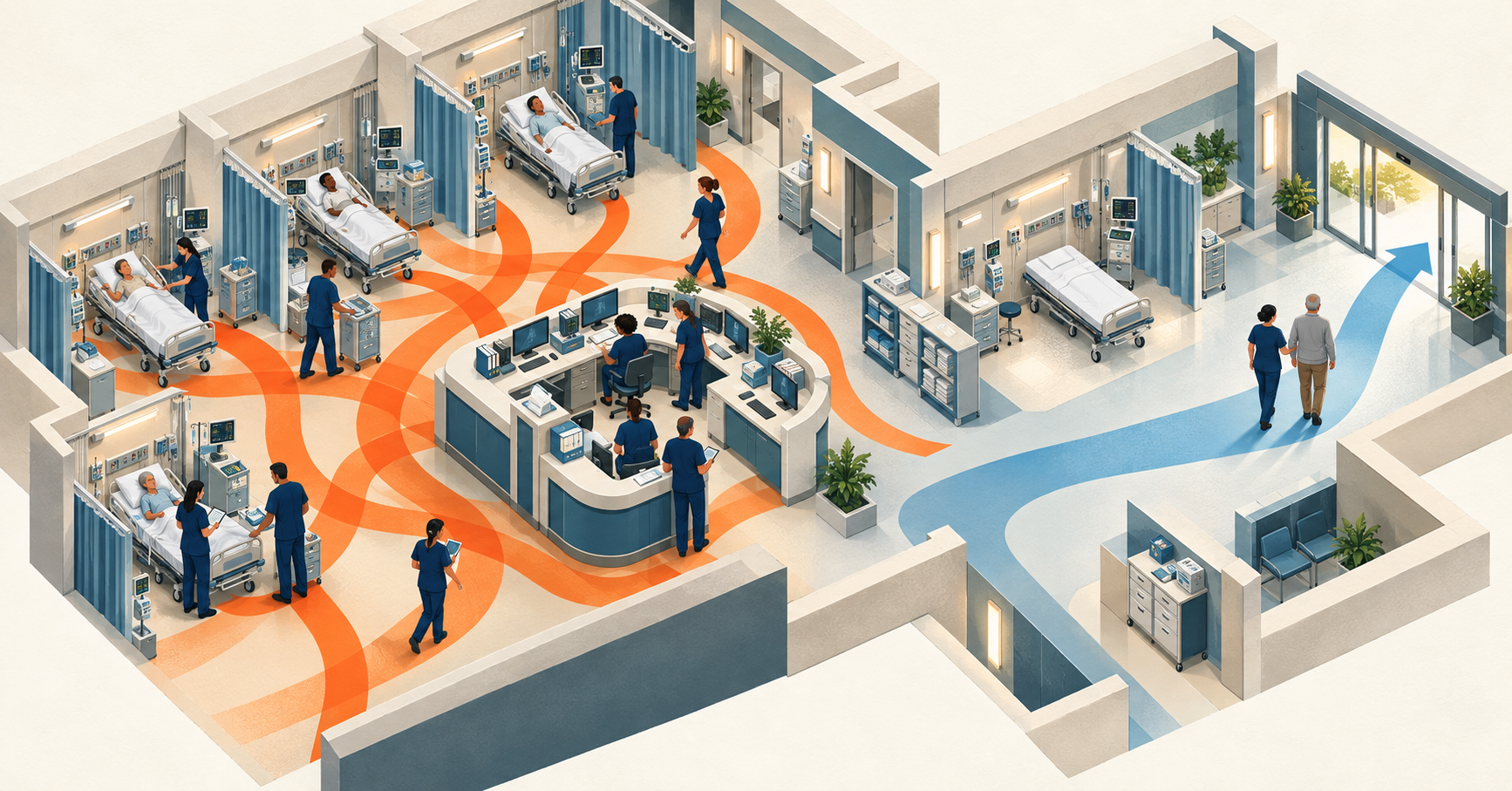
Many EDs incentivize their doctors to break flow. If your system pays for RVU production or heavily emphasizes door-to-doc times, take a few minutes to consider what happens when picking up the next patient takes priority over finishing the patients already in process.
EDs, and especially ED docs, have a bias toward starting: see the next patient, get the workup going, make sure every resource is being used to its fullest. It feels productive because everyone is busy, and busy must be good. Right? Leaders imagine that faster initial evaluations and rewarding doctors to “move fast” must be productive because it fills beds and nursing task lists. But alas, a busy ED does not a productive ED make.
Here’s the part that’s easy to miss. At any given time, the department’s flow is limited by its pace-setting resource. We recommend designing the system around the physician as that resource, but in practice the constraint may be nursing capacity, an available bed, or the CT scanner. Everything else can run flat out, but patients only move through as fast as that one resource can finish (not start) its work. Keeping everyone else busy doesn’t raise that ceiling; it just piles work in process into every corner of the department. Every one of those patients demands attention, eating the protective capacity of the resources meant to support the pace-setting one. That capacity is the slack that keeps those resources from becoming the next bottleneck.
Every start adds work in process. Despite our pride in being the multitasking “short-order cooks” of the ER, our attention can only go one place at a time. Doctors constantly choose between seeing a new patient and completing the procedure, reassessment, or disposition that would clear a bed.
That seemingly simple choice ripples through the whole department. When we delay a discharge to start another patient, both beds stay full, and the nurse is now caring for both. The new patient adds lab work, maybe a CT, maybe a consult, while the patient who could have left is still there.
As everybody gets busier, the problem compounds. The patient ready for discharge may stay even longer, because the nurse who had one discharge to complete now has a list of new tasks competing for attention. Unless the team coordinates and paces starts to finishes, the discharge gets buried. We can make a fully staffed department feel understaffed simply by filling every resource with work in process, and the pace-setting resource gets buried deepest.
Our metrics can make it worse. I’ve worked in departments where door-to-doc times were heavily emphasized and physicians were paid on RVU production. The incentive was clear: stop the clock and stake your claim to the RVUs by signing up for the next patient, even with a large panel of active patients who needed attention.
When working in these departments, there have been times I couldn’t see a new patient because there were no available treatment spaces, while partners kept picking up patients rather than clearing beds. I’ve even seen unnecessary testing ordered in the rush to get a workup going. That adds work for the rest of the department and can extend the patient’s stay while everyone waits on a result nobody needed.
The metric says “seen sooner,” but the department gets busier without necessarily getting more patients through. Patients waiting for disposition stay in beds, and the congestion eventually backs up into the waiting room. As the day plays out, some patients get their initial evaluation sooner while the rest of their visit takes longer, and others sit through significantly inflated waits.
Even in departments that incentivize starts, when I focus on finishing active patients, I regularly hear from nurses that shifts feel smoother and less chaotic, and I’m not seeing fewer patients. All the same work still has to happen, but the order matters. Finishing frees beds, reduces competing demands, and gives the pace-setting resource room to do the one thing that actually moves the department: complete the next patient’s care.
Of course, clinical urgency comes first, and some patients need to be seen immediately. But for the work we can sequence, reflexively prioritizing another start deserves scrutiny.
Take a look at what your department rewards. Does it recognize getting patients safely through their care, or mainly getting their names onto a physician’s list?
Stop rewarding starts and start coordinating around finishes.
Ben Newman is an emergency physician and co-founder of Better Patient Flow.